
LOS ANGELES MULTIFAMILY MARKET
KST has completed 200+ Hollywood multifamily sales totaling more than $350M. We use that experience to advise owners on value, property preparation, buyer selection, and sale timing.
KST has completed more than 200 Hollywood multifamily sales totaling over $350M. The 25 transactions below represent a selection of that work across different building sizes, price points, conditions, and representation roles. We use this experience to evaluate how current income, property condition, location, and buyer demand affect value and sale strategy.
Hollywood Sales
Hollywood Volume
Years in LA Multifamily
Selected sales in this archive
Stay Updated on Exclusive Opportunities & Off-Market Deals
A Practical Read on Your Hollywood Building
Most owners already have a value in mind before they call us. It may come from a nearby sale, an appraisal, or an unsolicited offer. We review that number against the building’s current income, tenant profile, physical condition, location, and likely buyer pool.
After more than 200 Hollywood multifamily sales totaling over $350M, we have seen two nearby buildings reach different outcomes because the buyer received different income, vacant units, parking, physical improvements, or future work. Those differences matter more than proximity alone.
Before recommending a price, we identify the facts buyers are likely to value, the issues they may price cautiously, and the buyer profile most likely to complete the purchase. That analysis supports a realistic value range and a clear discussion about timing.
Iconic Location and Lasting Renter Demand
Hollywood combines entertainment employment, transit, restaurants, nightlife, shopping, and cultural destinations with a large supply of established apartment buildings. Renters can live on a residential street while remaining close to studios, production companies, agencies, sound stages, and post-production firms throughout Hollywood and the surrounding area.
The market changes from one part of the neighborhood to another. Near Franklin Village, Beachwood, and the base of the hills, quieter streets, older architecture, hillside access, and proximity to Griffith Park contribute to the rental experience. Around Hollywood and Highland or Hollywood and Vine, Metro access, restaurants, entertainment venues, and a more active street environment support a different renter profile.
West of Highland and north of Santa Monica Boulevard, the neighborhood sits between Hollywood’s entertainment industry and West Hollywood’s restaurants, design businesses, nightlife, and retail. Residents can reach Paramount Pictures, Netflix, Sunset Gower Studios, the Walk of Fame, TCL Chinese Theatre, Ovation Hollywood, groceries, fitness, and everyday services from a relatively compact area.
The housing stock includes 1920s courtyard properties, low-rise apartment buildings, mid-century assets, and newer infill. Unit layout, natural light, parking, outdoor space, street noise, and the building’s physical condition influence how a property competes for renters. We use those block-level and property-level differences when selecting sales and identifying the likely buyer pool.
KST’s Selling an Apartment Building in Hollywood guide covers the decisions owners face before a sale. The Hollywood Community Plan provides the City’s current land-use context.
The Rent Roll Has to Hold Up
Many Hollywood apartment buildings fall under the City of Los Angeles Rent Stabilization Ordinance. Buyers review the current income, move-in dates, legal increase history, deposits, parking and laundry income, utility responsibilities, notices, and LAHD records.
Below-market rents can support a future-income case, but buyers also account for timing, renovation costs, turnover uncertainty, and the income the property produces while they wait. A vacant unit with a supported market rent is easier to underwrite than an occupied unit with no defined turnover date.
The rent roll, leases, deposits, notices, and City records should be reconciled before marketing. When the records differ, buyers may use less income in their valuation, request additional contract protection, or revisit the price during escrow.
The Los Angeles Housing Department provides current RSO guidance, forms, and allowable-rent information.
How SB 79 May Affect a Hollywood Property
Hollywood owners near Metro B Line stations are asking how SB 79 may affect development potential. The answer requires a parcel-level review.
For a qualifying housing project near a mapped transit stop, SB 79 can establish development standards that differ from local zoning. The analysis still depends on the mapped stop and tier, distance from a station entrance, current zoning, affordability requirements, tenant protections, demolition limits, and project economics.
We separate the value of the operating apartment building from a development scenario. If a development assumption has not been verified, it should not be included in the asking price as a guaranteed outcome. KST’s SB 79 map guide for Los Angeles County explains the property-level questions, and California’s enacted SB 79 text provides the statutory language.
Preparing the Property Before a Sale
Owners often ask whether to renovate a vacancy, replace an older system, or sell the building in its current condition. We begin with work that affects safety, insurance, financing, active water intrusion, or a known compliance issue.
A documented roof replacement, completed balcony repair, or renovated vacancy can help buyers underwrite the building with fewer assumptions. A cosmetic project may not return its cost if it delays the sale or reflects finishes the next owner would replace.
6720 Franklin Pl. illustrates the importance of matching preparation and marketing to the asset. The 37-unit vintage brick building was nearly a century old, and rising interest rates narrowed the buyer pool. KST presented the existing income, character, location, and improvement opportunity to buyers experienced with that type of property. The campaign generated five offers in one month and closed at $7,526,000.
How Buyer Fit Shaped Two Hollywood Sales
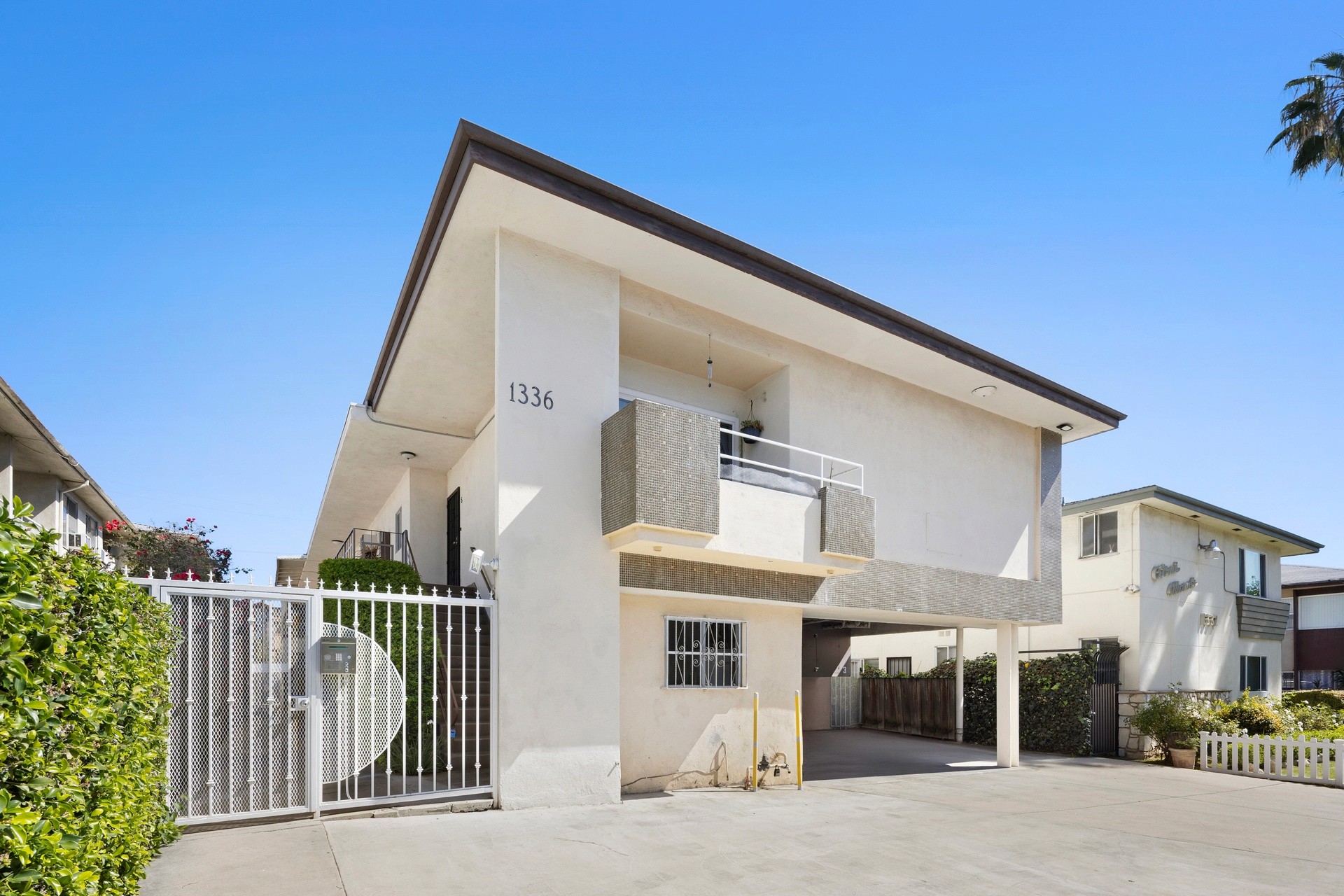
At 1336 N. Citrus Ave., many leveraged buyers could not support the day-one income with new debt. KST focused on buyers able to accept the current return and hold for the longer-term plan. A 1031 exchange buyer completed the purchase in a 21-day escrow.
1301 N. Mansfield Ave. presented a different investment. The 19-unit building had two renovated vacancies and completed balcony work. Those improvements gave buyers immediate information about renovation costs and achievable rents. Several offers were submitted before another exchange buyer completed the $3.9M purchase, 64 days after the listing agreement was signed.
Citrus required a buyer who could be patient with the income in place. Mansfield offered completed work and vacancies that could be used immediately. Each property required a different buyer strategy based on its income, condition, and immediate business plan.
What We Review Before Recommending a Price
We can begin with the address and current rent roll. A reliable valuation usually requires:
Current leases, move-in dates, deposits, and parking or laundry income
Trailing 12-month income and expenses, including insurance, utilities, and recent repairs
RSO records and the status of any exempt, replacement, or unpermitted units
Information about vacancies, renovations, roof, plumbing, electrical, seismic work, balconies, and other capital needs
Any applicable SB 721 inspection report, repair scope, permit, or completion record
The owner’s debt, timing, and plans for the proceeds
We use that information to prepare a value range and estimated seller net. If a likely price is close to a Measure ULA threshold, we calculate proceeds at more than one sale price. The Los Angeles Office of Finance publishes the current Measure ULA thresholds and rates.
This information is for general informational purposes and is not legal, engineering, or tax advice.
Hold, Refinance, or Sell
A valuation should give an owner a useful basis for deciding among the available options.
Holding may make sense when the income is dependable, the debt is favorable, the work is manageable, and the property still fits the owner’s plans. Refinancing may provide needed capital without a sale. Selling may become more useful when management is taking too much time, major work is approaching, ownership is divided, or the equity has a clearer use elsewhere.
Our When to Sell an Apartment Building guide outlines the decision in more detail. Owners considering an exchange can also review our 1031 Exchange Los Angeles guide. To discuss a Hollywood property, contact KST.
Hollywood Multifamily Broker FAQs
I received an off-market offer. How should I evaluate it?
Compare the offer with the outcome the property could reasonably produce in the broader market. Review the price, estimated seller net, buyer experience, proof of funds or financing, contingencies, diligence period, closing schedule, and the likelihood of a price revision during escrow. A lower offer with strong terms and an experienced buyer may produce a better result than a higher offer built on unsupported assumptions.
Will buyers give me credit for below-market rents?
Usually, but the credit depends on the current rent, move-in date, legal increase history, likely turnover, renovation cost, and the income the property produces while the buyer waits. A renovated vacancy with a supported rent is easier to value than an occupied unit with no defined turnover date.
Should I renovate a vacant unit before selling?
One completed unit can show buyers a likely renovation cost, finish level, and achievable rent. The work still has to justify the time and expense. When a renovation would delay the sale or the likely buyer has a different plan, preserving the vacancy may be more useful.
Does my Hollywood building need to be SB 721 compliant before I sell?
If the property has covered exterior elevated elements, the inspection status and any required repairs should be understood before marketing. The City of Los Angeles required covered apartment buildings to complete the initial inspection by January 1, 2026, with recurring inspections every six years. The inspection report, permits, repair scope, and completion records help buyers estimate remaining cost and timing. The Los Angeles Housing Department’s exterior elevated element guidance provides the current requirements.
How much does parking matter in Hollywood?
Parking value depends on the unit mix and the block. Studios and one-bedroom units near Metro may be more tolerant of limited parking. Larger units on quieter residential streets often compete for renters with more cars. Tandem, compact, uncovered, and unpermitted spaces should be evaluated separately.
Could my building be worth more as a development site?
Possibly. Review the parcel, zoning, lot size, existing improvements, tenant situation, SB 79 eligibility, demolition limits, affordability requirements, and project economics. Development value should be evaluated separately from the current operating value until those assumptions are verified.
What should I send KST for an opinion of value?
Start with the rent roll, trailing 12-month income and expenses, leases, move-in dates, deposits, other property income, insurance, property tax, repair history, and any notice or agreement affecting a tenancy. Include inspection reports and records for seismic, balcony, roof, plumbing, and electrical work when available.
Hollywood Multifamily Success Stories
The Stevens Difference
Kenny Stevens Team brings 25+ years of Los Angeles multifamily experience, with $2.75B+ in LA apartment sales across 675+ closed transactions.


25+
YEARS OF LA MULTIFAMILY EXPERIENCE
25+ years advising Los Angeles multifamily owners.

$2.75B+
LA MULTIFAMILY SALES VOLUME
Closed Los Angeles apartment sales.

675+
CLOSED TRANSACTIONS IN LA
675+ Los Angeles multifamily transactions closed.